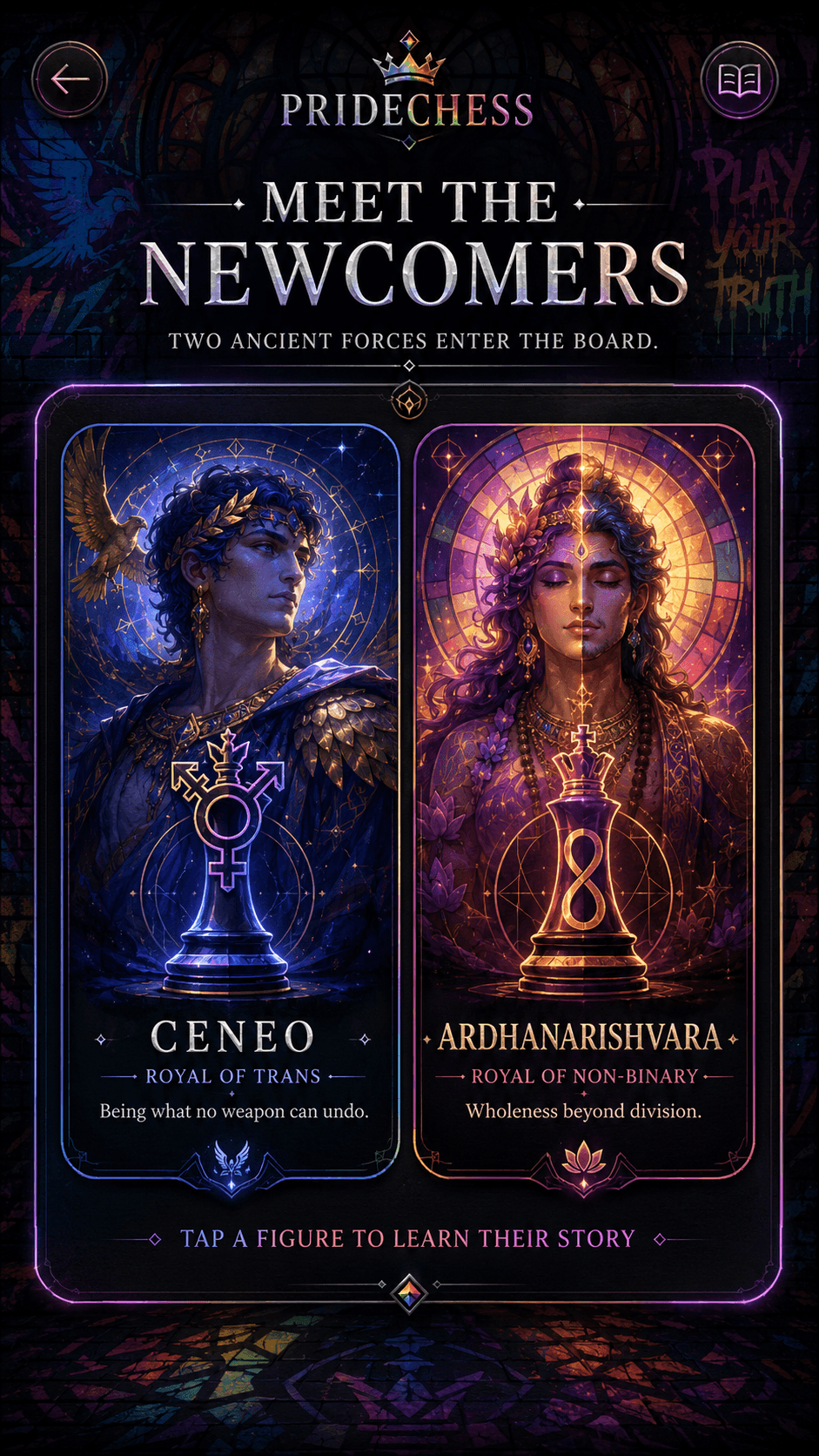
Meet the Newcomers: Ceneo and Ardhanarishvara
Tap a figure
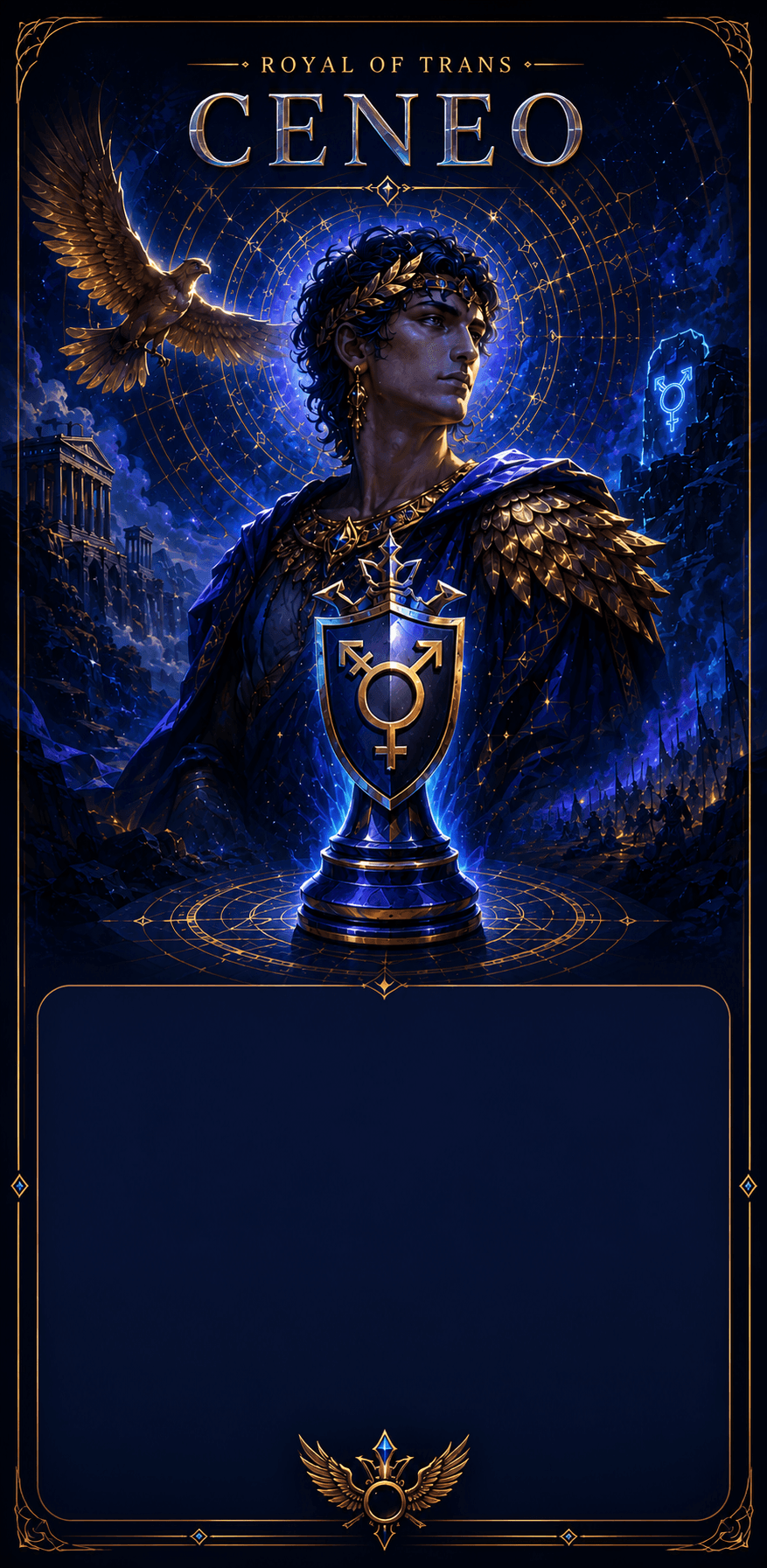
Ceneo, royal piece of Trans

In Greek mythology, Caenis was a young Thessalian woman assaulted by Poseidon. When the god offered her a wish, she asked to become a man — and to be made invulnerable. Caenis became Caeneus, a warrior no weapon could wound.

Caeneus fought alongside the Lapiths in their legendary battle against the Centaurs. Unable to be killed with blades or spears, the Centaurs buried Ceneo beneath uprooted trees. In some accounts, Ceneo's spirit rises from the earth as a golden-winged bird.

For PrideChess, Ceneo honors one of the oldest surviving Western stories of gender transformation: a figure who chose who to become, and whose existence could not be destroyed by any weapon built. Ceneo is represented as a shield because transition meant armor, survival, and chosen form.

Represented in PrideChess with respect to the Greek mythology from which this character originates.
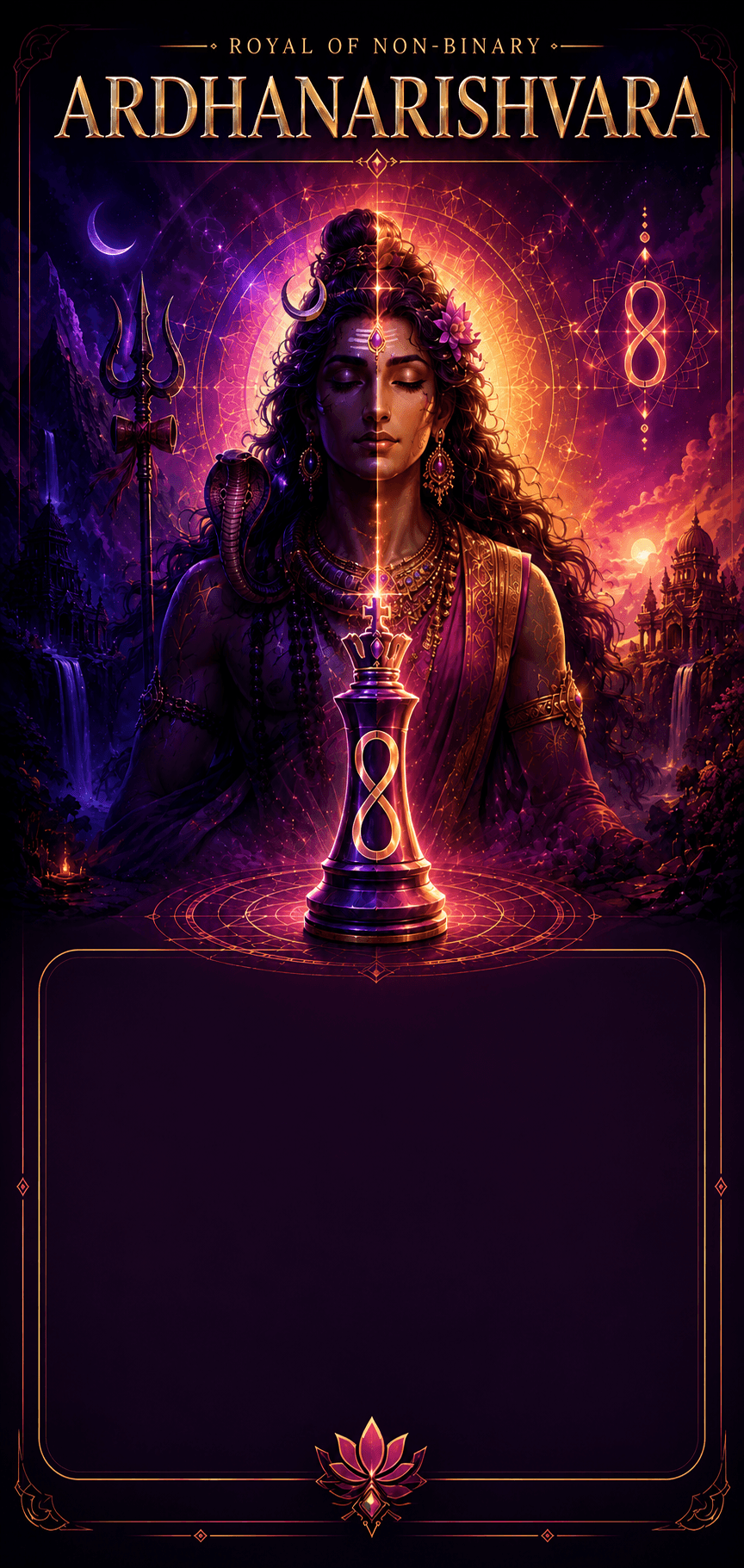
Ardhanarishvara, royal piece of Non-Binary

Ardhanarishvara is one of the most recognized forms of Shiva in Hindu tradition. The name means “the Lord who is half woman”: 'ardha' = half; 'nari' = woman; 'ishvara' = lord. The deity is depicted as a single body divided vertically — Shiva and Parvati joined as one.

Ardhanarishvara represents a reality beyond division. Not one side against the other, but opposites integrated: consciousness and energy, stillness and becoming, masculine and feminine held in one complete form.

Across centuries, this figure has appeared in sculpture, philosophy, devotion, and dance. At the Elephanta Caves near Mumbai, one of its monumental forms stands carved in stone. Represented in PrideChess as a vertical infinity because duality isn't a split but a continuous being.

Represented in PrideChess with respect to the Hindu tradition from which this character originates, and as a wink to chess's place of origin.